



And finally… Unearthing Sheffield’s past
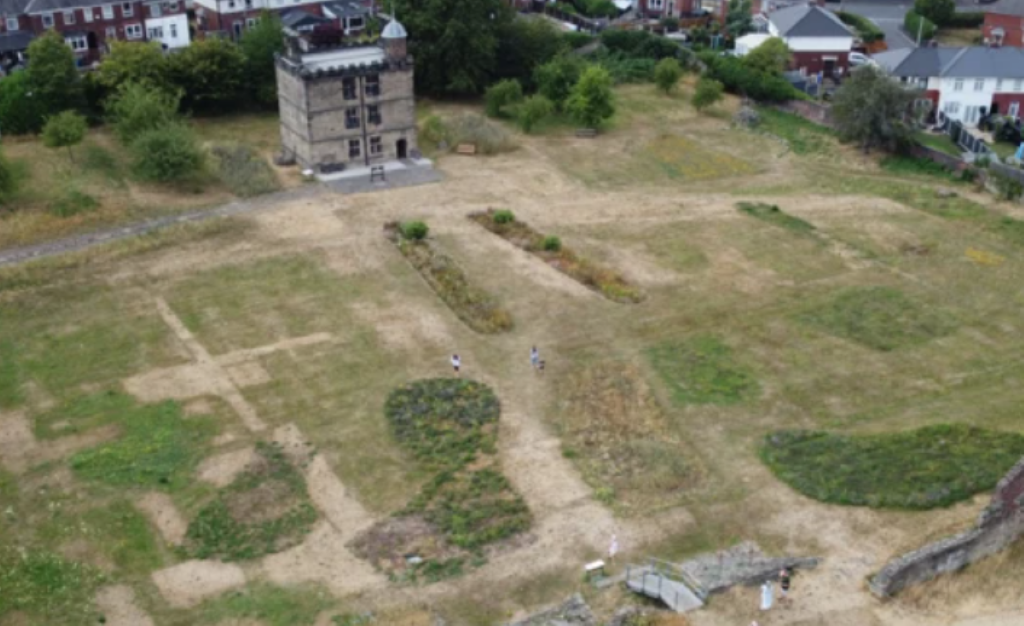
A prolonged spell of hot, dry weather has revealed the foundations of a 15th century hunting lodge at Manor Park, offering a rare glimpse of the city’s medieval built environment.
The lodge formed part of a medieval deer park and was recorded as far back as 1479, when George Talbot, the 4th Earl of Shrewsbury, paid for repairs to the building.
More than 300 years after it was dismantled, the former structure has made a surprise return to the skyline – albeit at ground level.
Dry conditions can expose buried archaeology because foundations and other underground features alter how plants grow in the soil above them. In this case, the grass has effectively provided a natural site plan, with drone photography from The Green Estate helping to reveal the former layout in greater detail.
The discovery comes with an interesting construction connection of its own. Archaeological investigations carried out in the 1960s and 1970s found evidence that the lodge was deliberately dismantled towards the end of the 16th Century, with its building materials reused elsewhere – proving that centuries before the modern construction industry got serious about recycling, Sheffield’s builders appear to have been giving old materials a second life.
Excavations also uncovered glass, pottery, and deer bones, suggesting the lodge was a rather upmarket example of medieval construction.
The lodge predates the Tudor manor that later stood on the site and is believed to have been used by the Earl of Shrewsbury and his guests for hunting and socialising away from Sheffield Castle.
Most of the Tudor buildings were demolished during the 18th century, leaving the Turret House as the main surviving structure.
The latest discovery has provided a reminder that Sheffield’s development story goes back considerably further than its industrial heritage – and that sometimes all it takes to uncover a new piece of it is a little less rain.