


Hobson & Porter completes restoration of Hull’s bomb-damaged National Picture Theatre
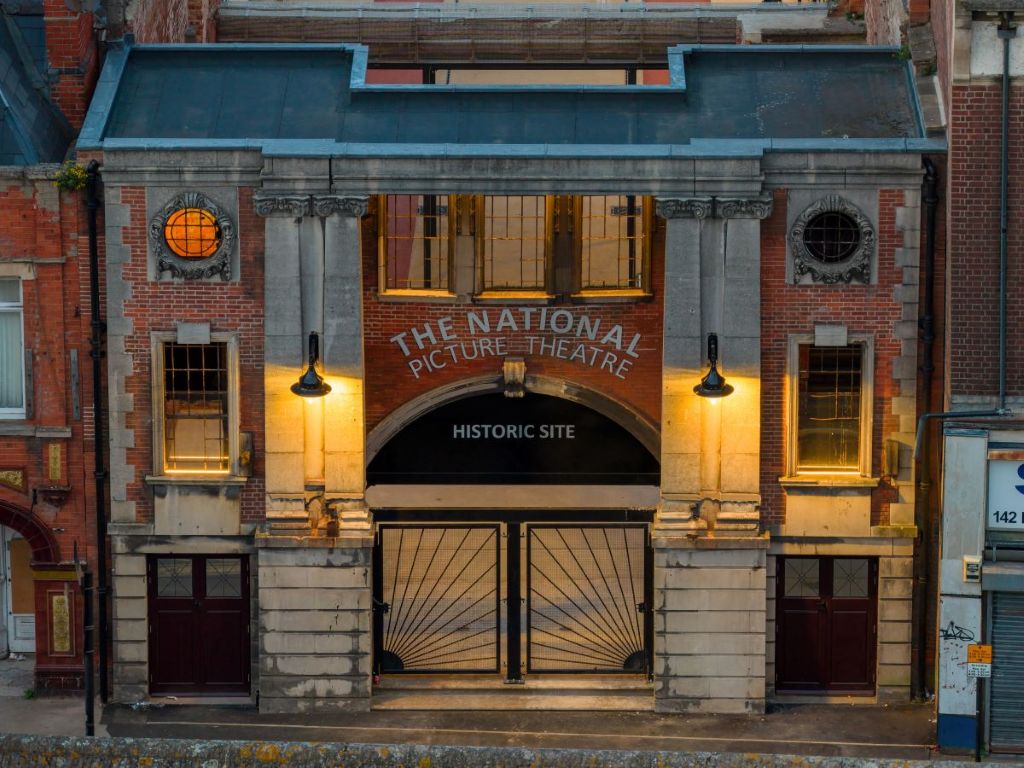
Eighty five years after the grade two-listed former cinema was severely damaged during a Luftwaffe air raid, the Beverley Road building has reopened – the first time it has been brought back into use.
Hobson & Porter led the restoration, using original materials and traditional techniques to reflect the building’s original 1914 design.
The work included stabilising and restoring the red-brick façade, installing sympathetic period-style lighting and conserving surviving wartime fabric.
The cinema was built in 1914 to designs by architects Runton and Barry and entertained audiences for almost three decades before disaster struck during an evening showing of Charlie Chaplin’s The Great Dictator on March 17, 1941.
A direct hit destroyed the auditorium and reduced much of the building to ruins. The 150 people watching the film were unable to reach the air-raid shelter and instead took cover in the entrance foyer – remarkably, all survived.
The site, once described as the UK’s last surviving civilian bomb-damaged building, has now been given a new use: The former auditorium, which originally held 1,050 people across a main floor and balcony, has been transformed into a flexible education and community events space.
It will also provide a place for visitors to learn about Hull’s experience during the Second World War and reflect on the lives of civilians affected by the bombing.
The restoration has been funded by The National Lottery Heritage Fund, Hull City Council, the UK Shared Prosperity Fund, and the National Civilian World War II Memorial Trust.
Cllr Jackie Dad, Hull City Council’s deputy leader and portfolio holder for culture and leisure, said: “The National Picture Theatre is an incredibly important part of Hull’s wartime history, and its preservation ensures that future generations can understand the profound impact the Second World War had on our city.
“For the first time, this site will become both an educational facility and a place where people can come together to reflect and remember loved ones.
“The careful work undertaken here not only protects a unique heritage asset but also creates a new community space that honours the resilience of the people of Hull.”