

UK’s first MND specialist centre completes
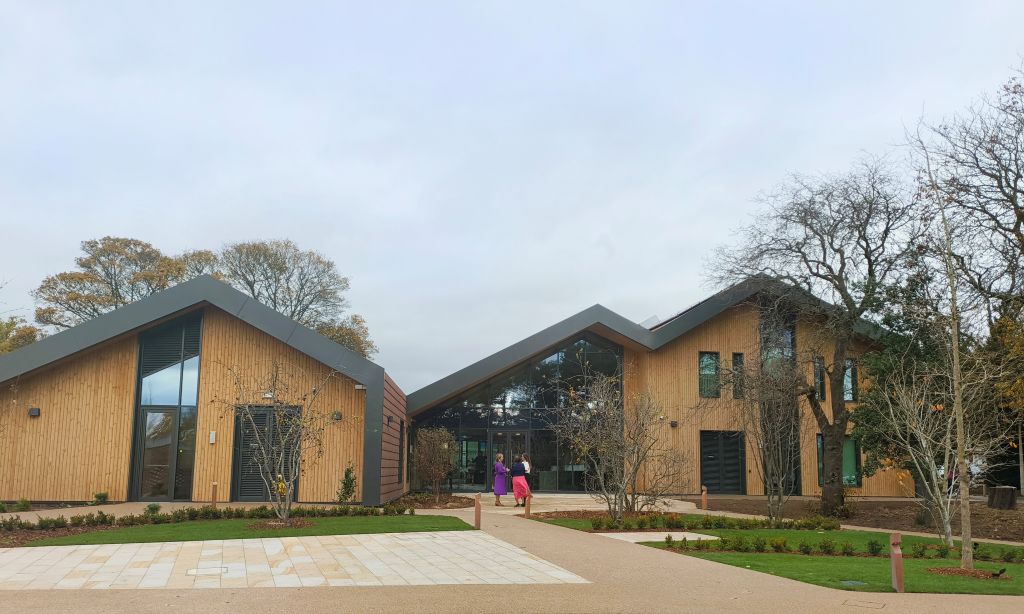
The £6.8m Rob Burrow Centre for Motor Neurone Disease at Seacroft Hospital in Leeds was constructed by Yorkshire-based contractor I&G and will open later this month.
Funded by Leeds Hospitals Charity, the centre will be run by Leeds Teaching Hospitals NHS Trust and will be the first of its kind to house specialist services for MND patients and their families under one roof.
Designed by Corstorphine & Wright, the 11,000 sq ft flagship building was constructed using modern methods of construction and has a spacious atrium, landscaped gardens, and wheelchair-accessible parking.
The scheme was procured by Leeds Teaching Hospitals NHS Trust through the Procure Partnerships Framework via a two-stage procurement process.
Over the past 10 years, referrals to the Leeds MND service have doubled. The centre was named after rugby league legend Rob Burrow, who campaigned for MND after being diagnosed with the condition in 2019.
Mark Boothby, joint managing director of I&G, said: “We’ve built and refurbished many health facilities over recent years and they’re some of the most rewarding projects our team gets to work on, because we can see the huge impact they have on the lives of patients and staff.
“The new Rob Burrow Centre for MND creates a sense of community and an environment that meets the needs of patients, families and staff and we’re honoured to have played a part in bringing this to life in Rob’s memory and for the entire MND community.”
Natalie Palframan, key account manager (North) at Procure Partnerships Framework, said: “We were privileged to support Leeds Teaching Hospitals NHS Trust in delivering this pioneering health facility.
“Early engagement and close collaboration between the Trust, I&G, and the wider project team were essential to the project’s success by ensuring the programme could be delivered at pace.
“The result is a truly special building that stands as a tribute to Rob Burrow’s legacy and will have a lasting impact on the lives of people living with MND, their families, and the clinical teams who support them every day.”